Summer is a time for trips and discovering the beauty of our Czech regions. I like to say that "paradise on earth" is right here all around us, and there is no need to travel far at all. In our news section, we offer travel tips for places connected with history, human fates, and our core themes—for learning and inspiration.
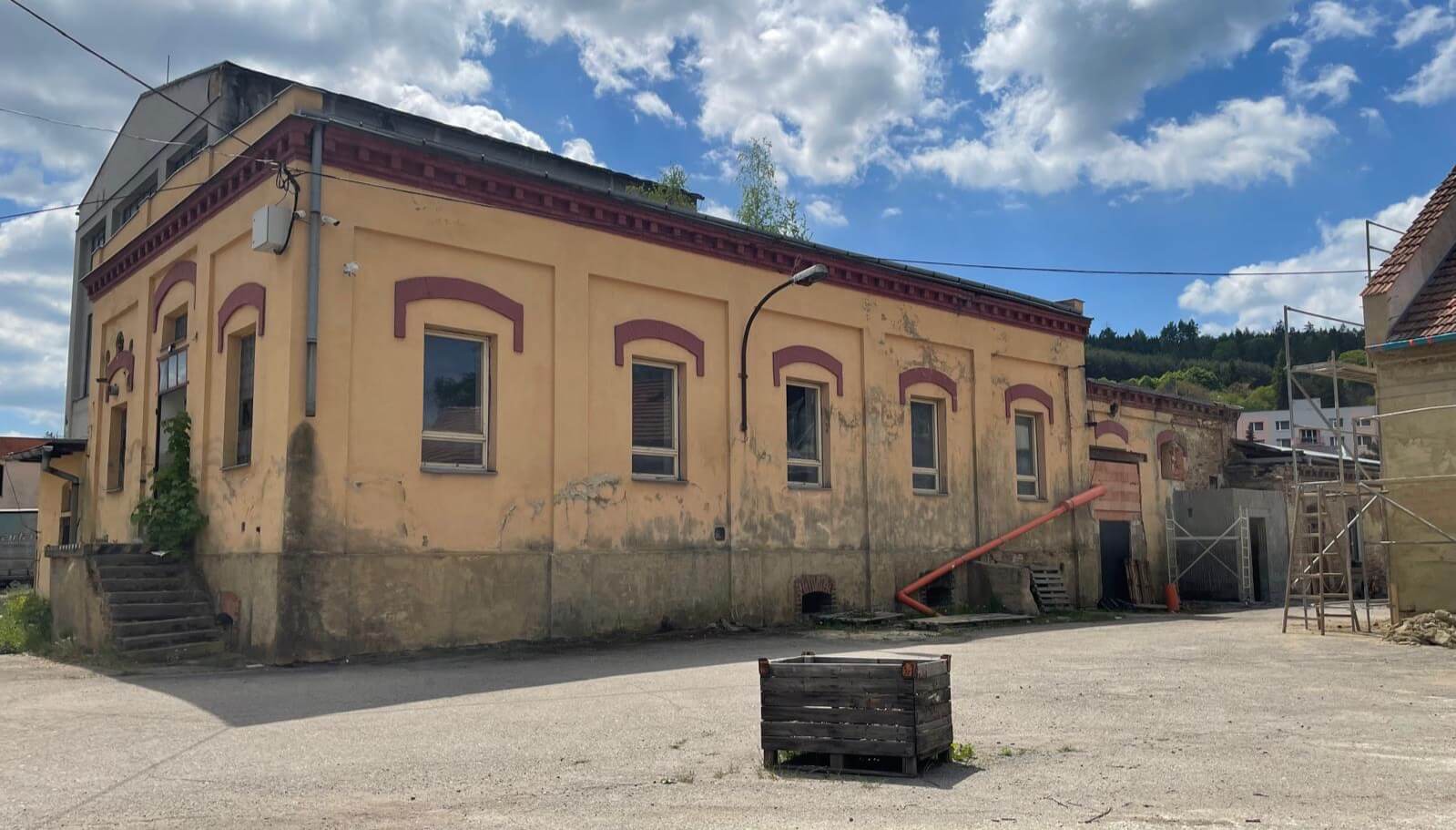
Do you remember the famous 1993 film Schindler's List, directed by Steven Spielberg? It was based on Thomas Keneally's 1982 book Schindler's Ark, which won the Booker Prize. The story of saving Jewish workers—700 men and 300 women—takes place at the so-called Schindler Factory in Brněnec, a small village near Březová nad Svitavou, about 15 kilometers from Svitavy. Today, Brněnec houses a fascinating memorial known as the Schindler's Ark, documenting the family of the original textile factory owners (the Löw-Beers), the rescue story of the Jewish prisoners, the figures of Oskar and Emilie Schindler, and interwar avant-garde Bauhaus design, as well as the former factory building itself, transformed into a place of remembrance.
In 1854, one of the textile factories of the later highly successful Jewish entrepreneurial family, the Löw-Beers, was established here. The sons of the founders, Aron and Jakob, gradually expanded the family business from Svitávka, Boskovice, and Brněnec to Brno. Management was later taken over by Jakob's son Arnold, and after him, his son Walter. The famous Villa Tugendhat in Brno is also connected with the Löw-Beer family—its owner, Grete Tugendhat, was the daughter of Alfred Löw-Beer, Arnold's brother. In 1938, the Nazis confiscated the Brněnec factory, though textile production continued there for some time.
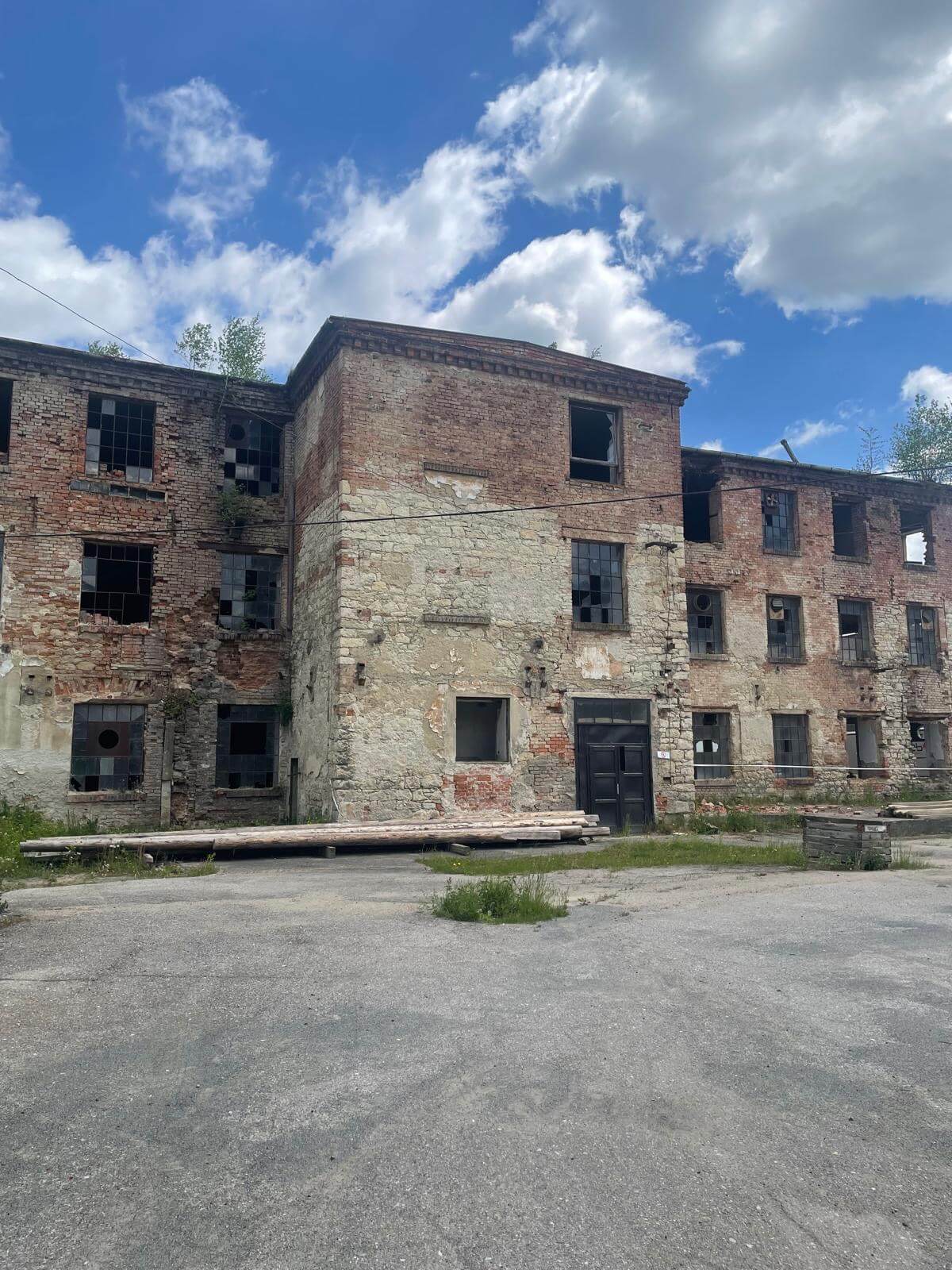
Oskar Schindler came from Svitavy. He was a chameleon of his time—working for German intelligence while supplying information to the Allies, owning a war manufacturing plant near Kraków, and collaborating with Jewish organizations. In 1944, he was instructed to relocate his war production from Kraków to a safer area, and he chose Brněnec. His condition for the relocation was the transfer of the Jewish prisoners who worked in his factory—people whose fates we know today as the story of Schindler's List. They stayed in Brněnec and engaged in acts of sabotage from November 1944 to May 1945. Beside Oskar, it was primarily his wife Emilie who cared for the survival of the prisoners in what was effectively the Brněnec concentration camp.
The building where the Jewish prisoners were housed and worked.
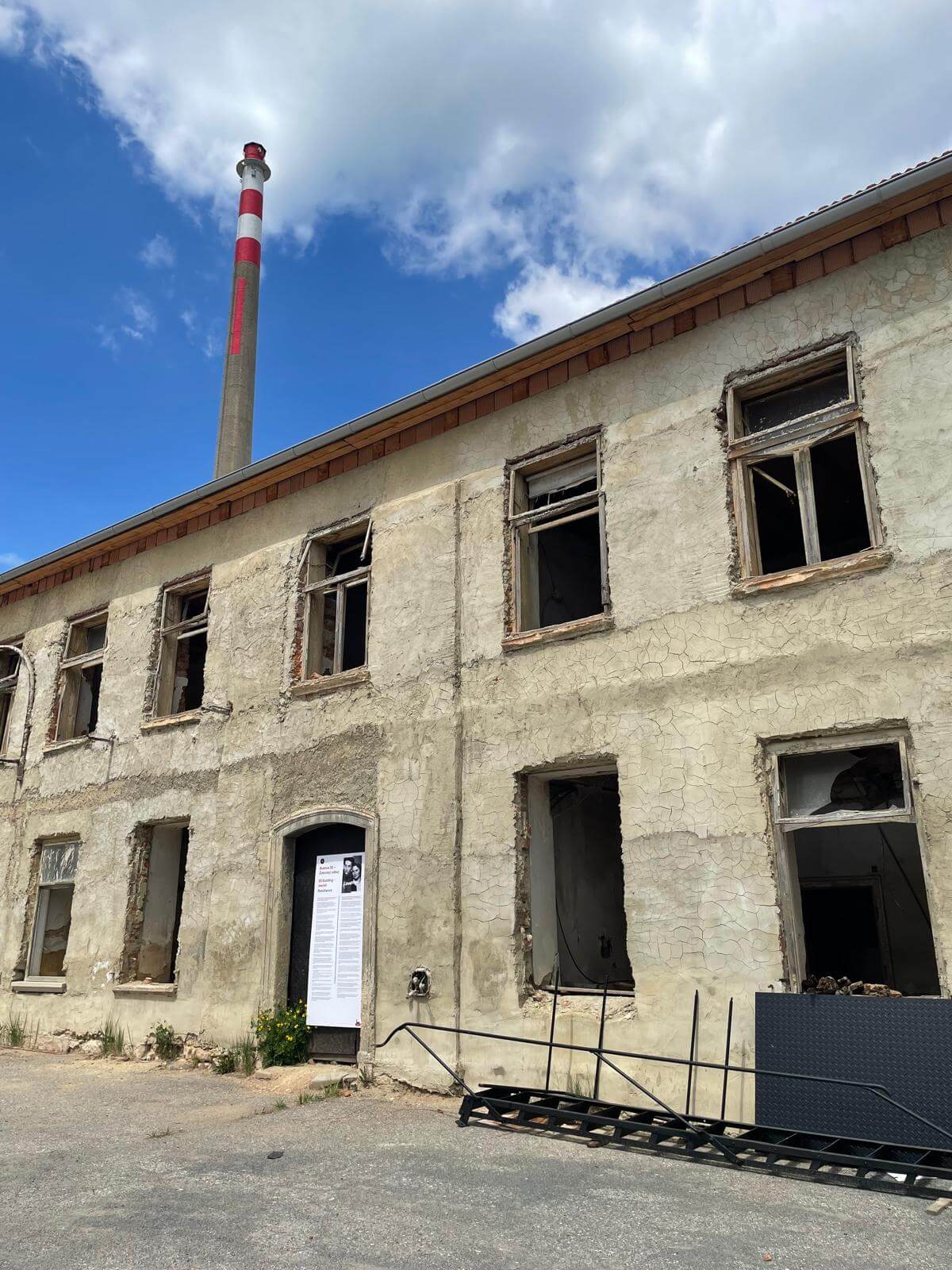
After the war, textile production resumed at the Brněnec complex and lasted until 2008. It was reportedly the second-largest textile factory in Central Europe, employing 2,500 people as late as the 1990s. Afterwards, the abandoned grounds fell into ruin, until the Löw-Beer family, led by Daniel Löw-Beer, stepped in to save the site in 2019. Recently, they opened a museum and educational center there.
You will easily spend an hour reading the engagingly prepared information panels (in Czech and English) and viewing historical artifacts—most notably the ring presented to Oskar Schindler by the prisoners prior to their release on May 8, 1945, inscribed with the words: "Whoever saves one life saves the world entire." Afterward, take time to watch a documentary film on the history, Spielberg's movie, and the current events surrounding the memorial, and take a guided tour of the gradually restored former textile factory, war production areas, and concentration camp buildings. Don't forget to admire examples of Bauhaus design, including "DNA"-themed merchandise. Be sure to get refreshments at the memorial café, as there are not many places to eat in the immediate vicinity.
We have previously reported on how Steven Spielberg collected numerous survivor testimonies before filming, and that these documents are located in Prague.
Recall the detective-like research by Judita Matyášová.
Equally fascinating is the story of Joseph Bau, a Kraków native, wartime document forger, right-hand man to Oskar Schindler, and perhaps even the savior of the Brněnec camp from extermination at the very end of the war. After the war, he and his wife, who survived Auschwitz, moved to Israel, where he became a renowned illustrator and animator. Further details about his life and family were published in Mladá fronta Dnes on June 6, 2026.
For summer reading (and beyond), I recommend Pavel Kosatík's book Business Under the Star of David (Podnikání pod Davidovou hvězdou), which features a detailed chapter on the Löw-Beer family and the "Moravian Manchester."
The site was visited together by Martina Jankovská (author of the text), Arnošt Polák, and Kateřina Lemerová (author of the photos).