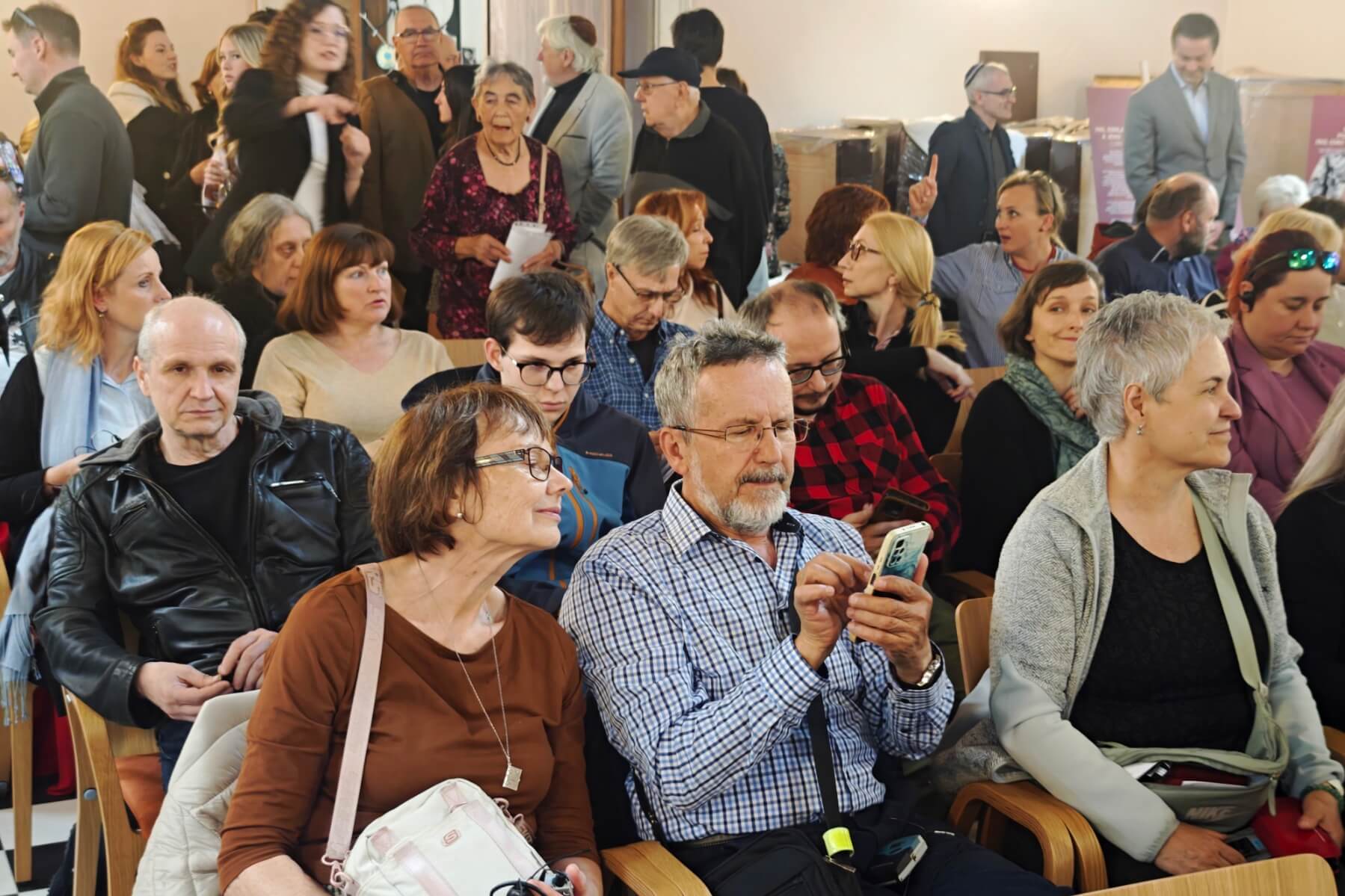
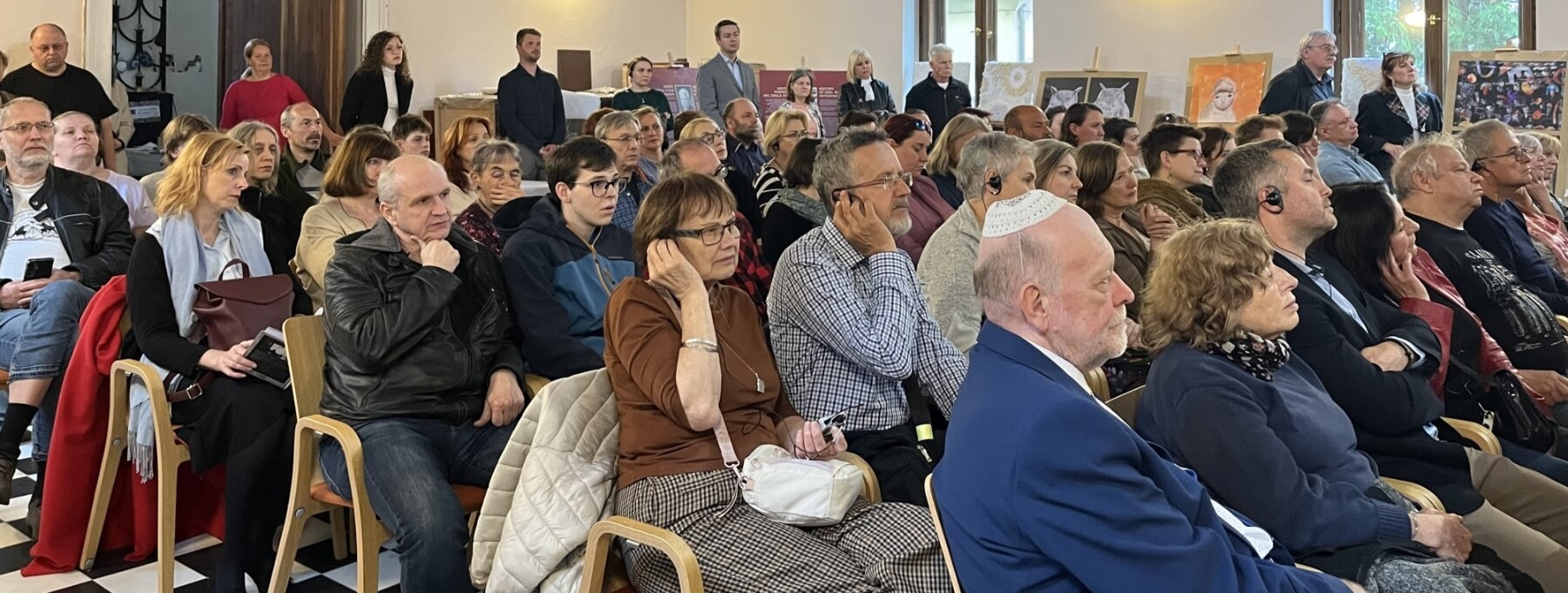
In early May, among my incoming email correspondence, an invitation to a meeting of three intriguing personalities at the Čáslav Synagogue caught my eye. The invitation was part of a series of events organized or facilitated throughout the year by the festival for its supporters, subscribers, and donors. Thus, on May 15, a few of us joined the participants in a symbolic homecoming of the prominent First Republic industrialist Ing. Emil Pick (1865–1945) from Canada back to Čáslav. This symbolic return was made possible by the historical first publication of his memoirs, which he wrote while in the Terezín ghetto. The ceremony was hosted by the Dr. Dagmar Lieblová Endowment Fund.
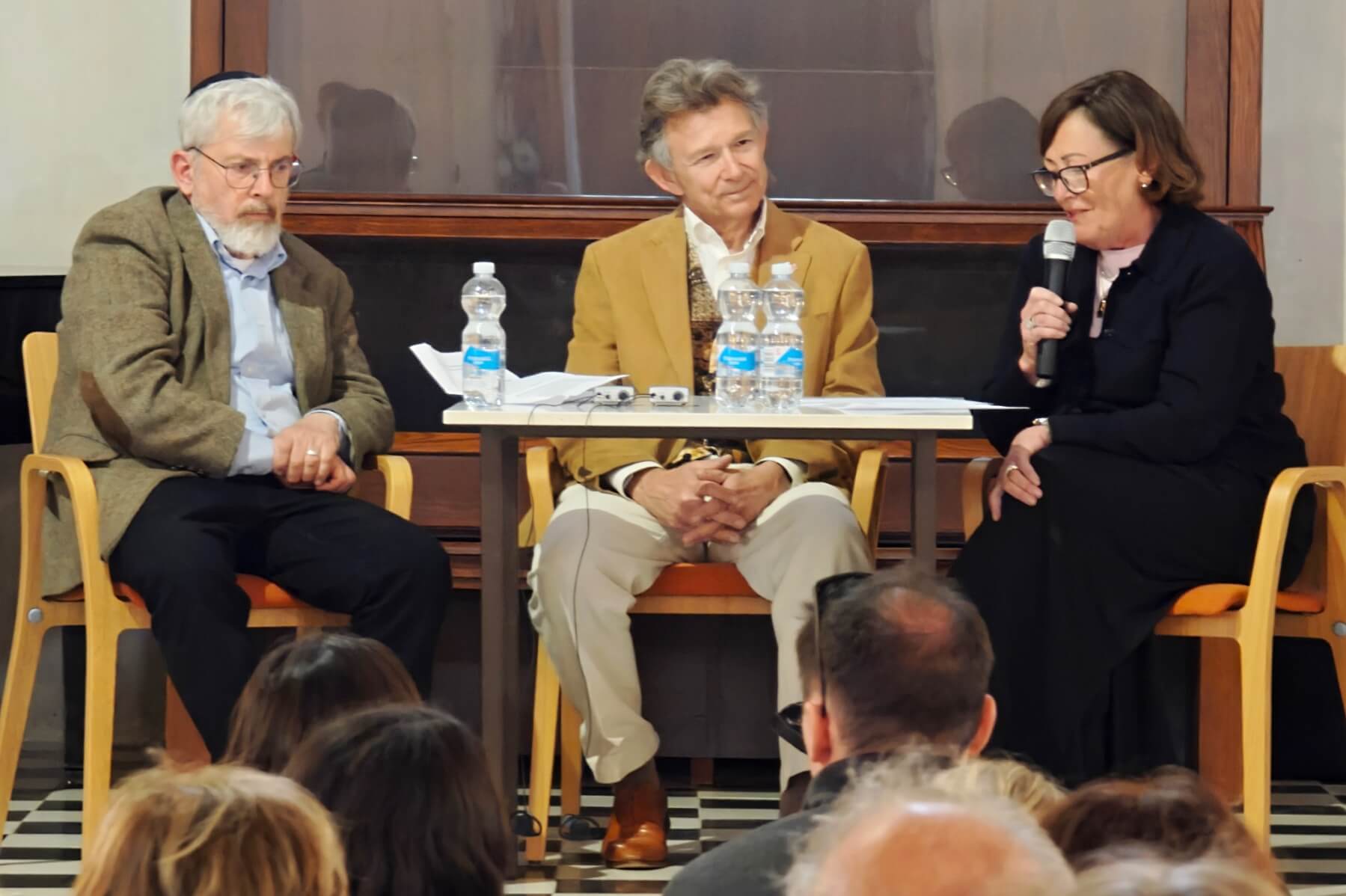
The aforementioned three notable personalities included, above all, Emil Pick’s great-granddaughter, Angela. Standing by her side was the son of Sir Nicholas Winton, the renowned savior of many children's lives. Their meeting was brought together by prestigious American journalist Jolyon Arthur Naegele, who has dedicated his entire professional career to events in Central Europe. Let us explore the motives that brought them together.
Ing. Emil Pick, a graduate of a chemical technical high school, founded a coconut oil refinery in a former Čáslav sugar factory in 1909, along with the production of dried chicory, vegetables, spirits, coffee substitutes, and yeast. Later, he turned his focus to edible vegetable fats, and the factory even supplied products such as kosher margarine. However, the systematic growth of the Kosmos Works began to encounter complications, and unfolding events soon affected other members of both his immediate and extended family.
In 1928, a devastating fire destroyed the factory. Yet, it proved to be a blessing in disguise—an unexpected impetus for a new era and a complete modernization of operations. The transformation of the company was successfully managed by Emil Pick’s only son, Pavel, who had joined the Kosmos Works after completing his studies at the Prague Technical University and became a business partner in 1929. He also expanded production to Slovakia.
The Munich Agreement and its aftermath brought another disaster upon the family. Foresightedly, Pavel Pick and his wife Mary sent their young sons—Emil’s grandsons, nine-year-old Petr and six-year-old Jan—to Great Britain. This was made possible thanks to the now-legendary trains organized by Sir Nicholas Winton. During the Protectorate period, the Kosmos Works was placed under forced administration and "voluntarily" changed owners. The Pick family moved to Prague in 1940. However, after several months, they were deported to the Terezín ghetto. It was here that Emil Pick wrote his memoirs as a personal message to his grandsons.
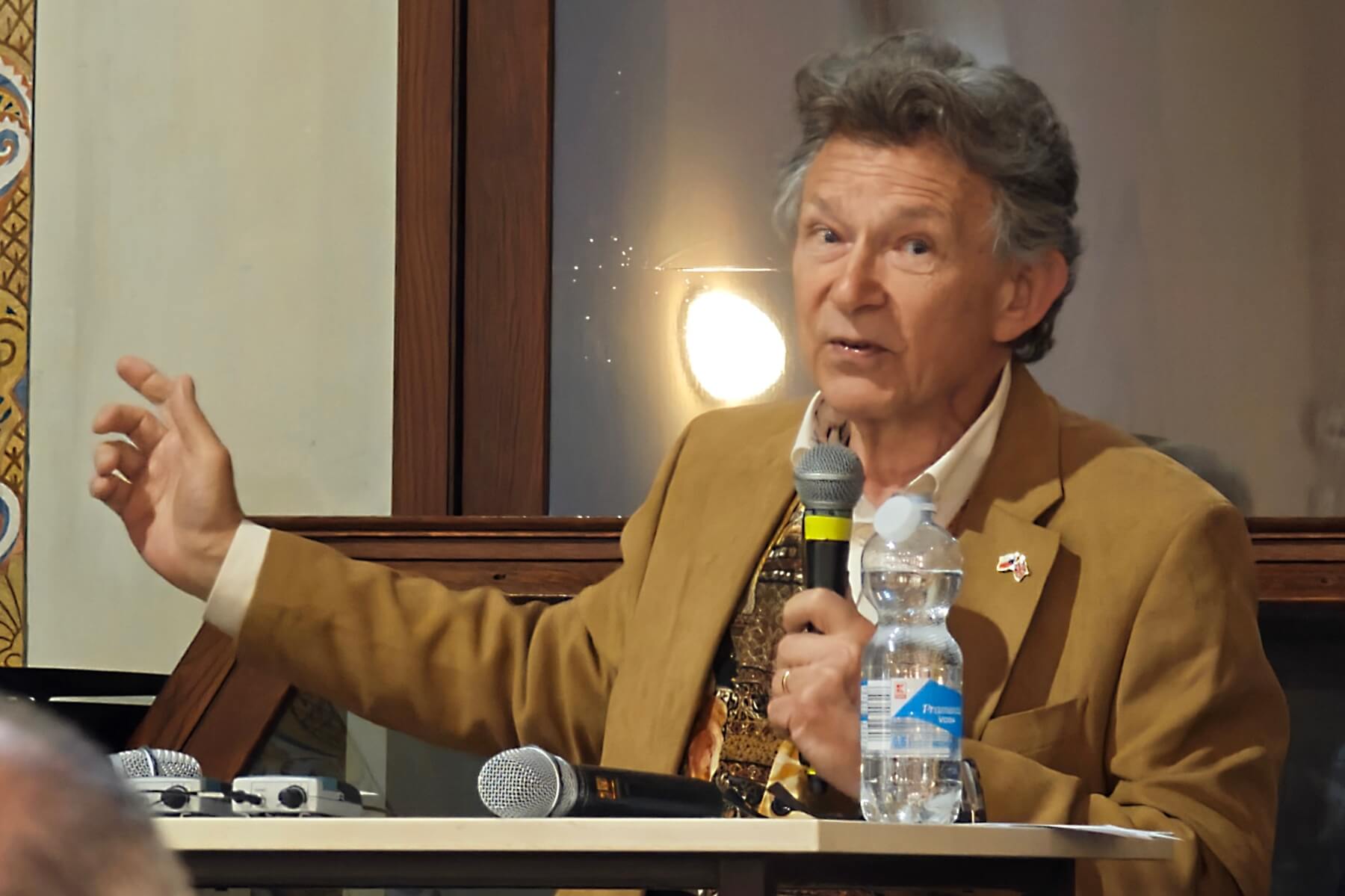
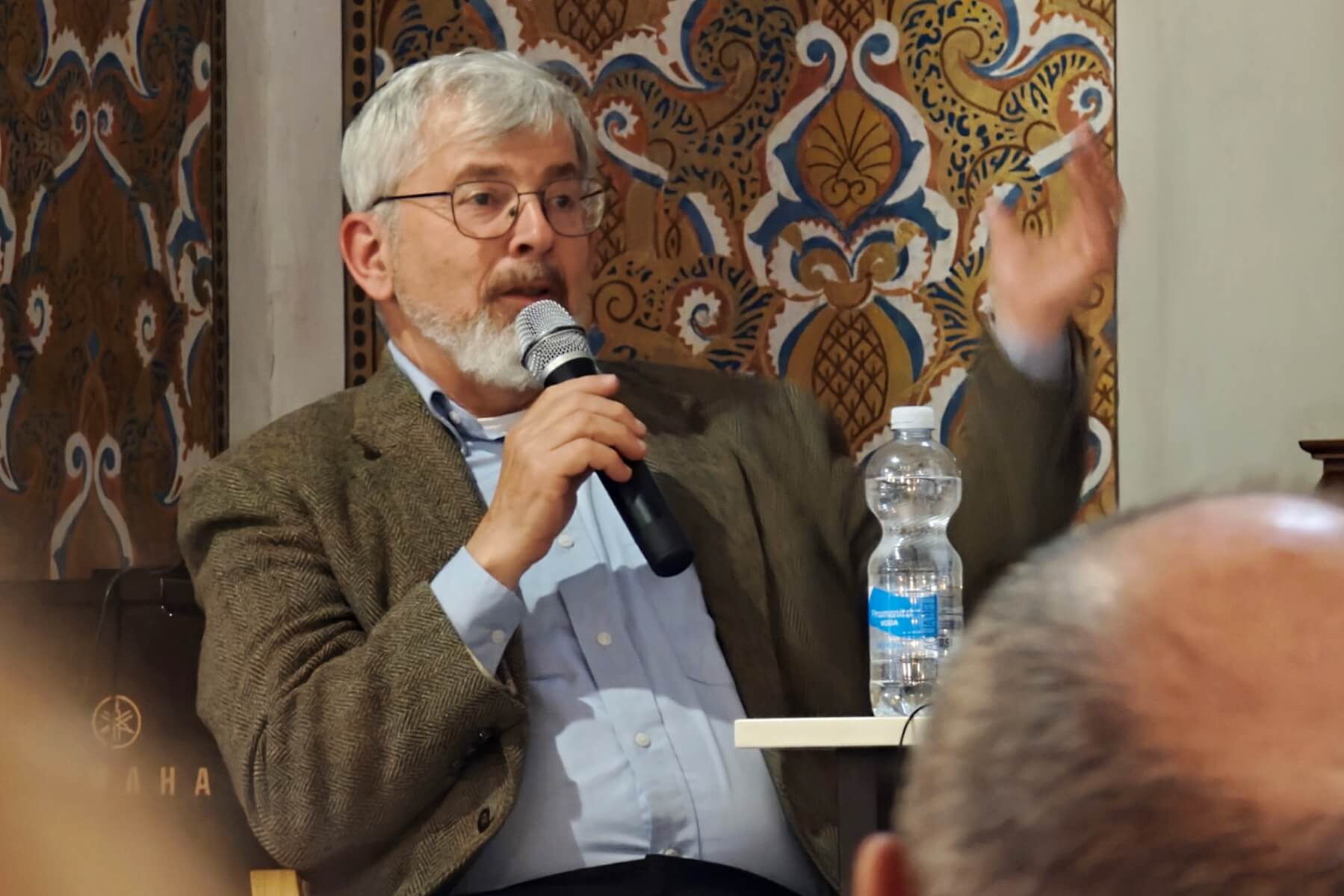
Journalist Jolyon Arthur Naegele, Emil Pick’s great-granddaughter Angela Pick Greenway, and Sir Nicholas Winton’s son Nick.
After returning from Terezín, Emil Pick lived with his wife, his son Pavel, and Pavel's second wife Věra, initially in Poděbrady and later on the Chlumek forest estate near Golčův Jeníkov, where Emil Pick passed away at the end of 1945. Their original property was never restored to them. In 1948, Pavel Pick and his family emigrated, first to Great Britain and then to Canada, where they settled. Later in Canada, John Pick—Pavel’s son and one of Winton's rescued children—became the father of Angela Pick Greenway, the great-granddaughter of the Čáslav industrialist Emil Pick.
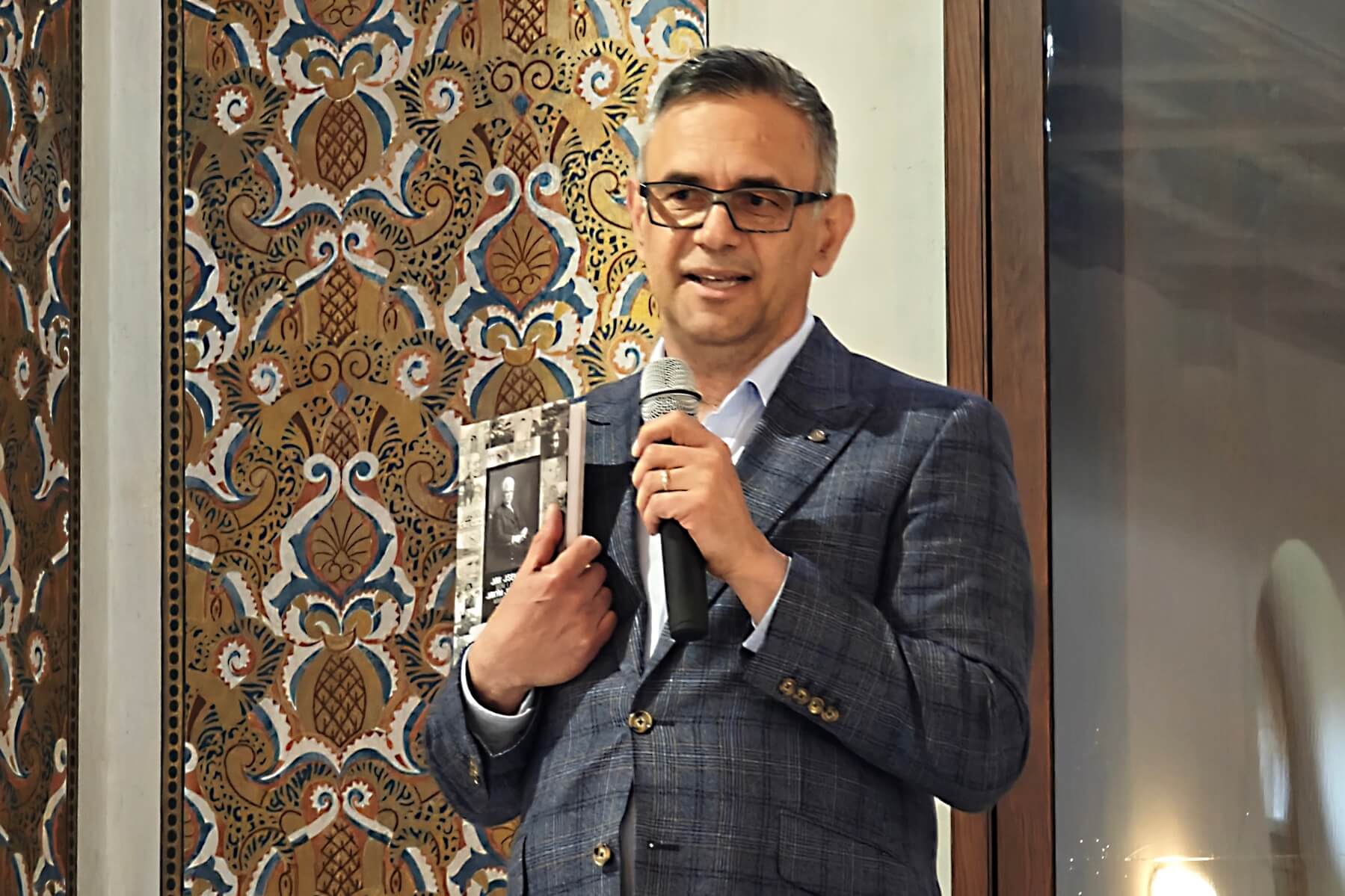
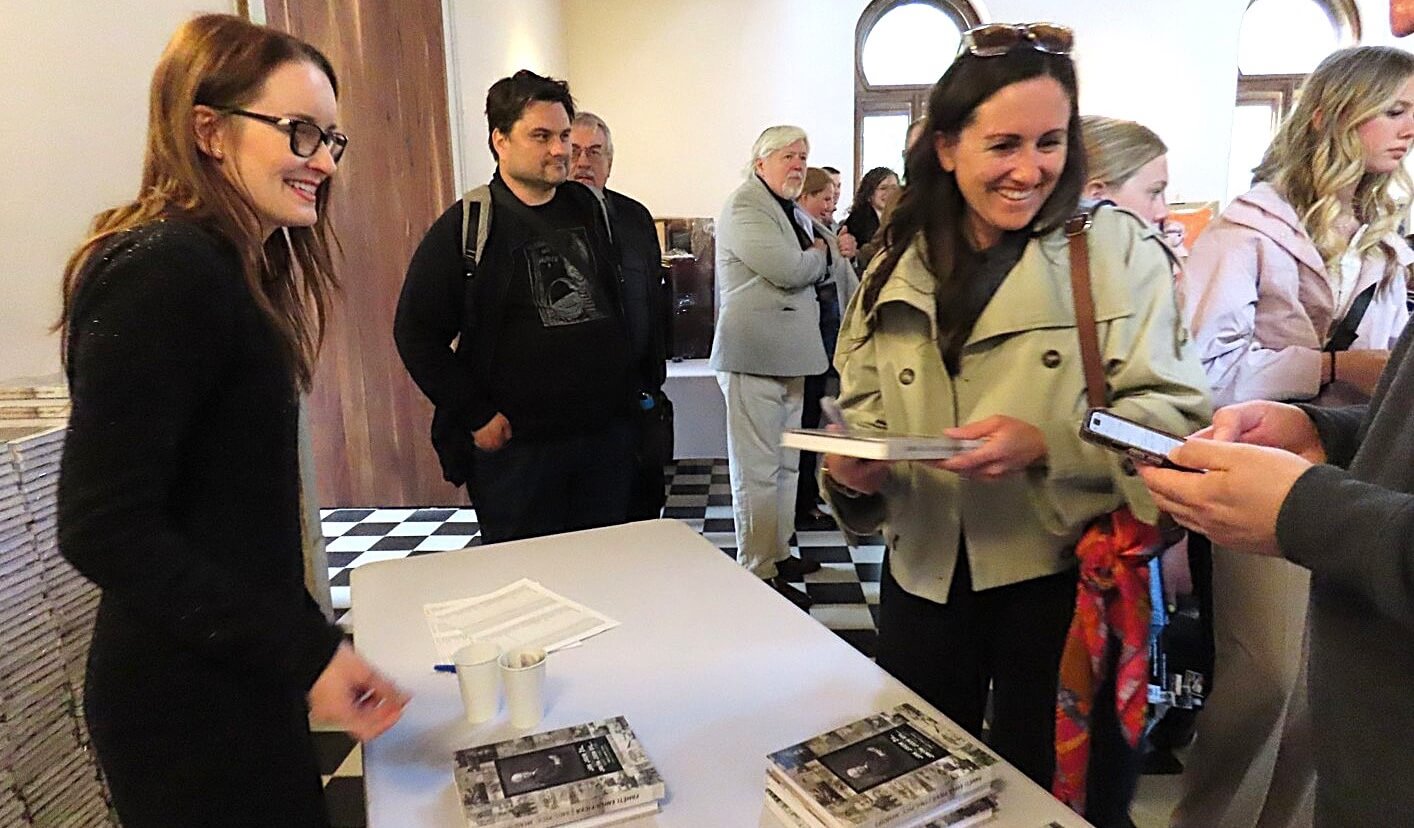
It was Angela Pick Greenway who visited Čáslav in mid-May. She visited the family tomb and unveiled a Stolperstein (remembrance stone) in memory of her grandmother in front of the villa on Masarykova Street. The highlight of her visit was the launch of the first edition of her great-grandfather’s Terezín memoirs, published thanks to the Dr. Dagmar Lieblová Endowment Fund in cooperation with Stillus Press publishing house. The book was presented by Martin Liebl, Chairman of the Fund's Board of Trustees. The festive event took place in the sensitively renovated Čáslav Synagogue.
Martin Liebl.
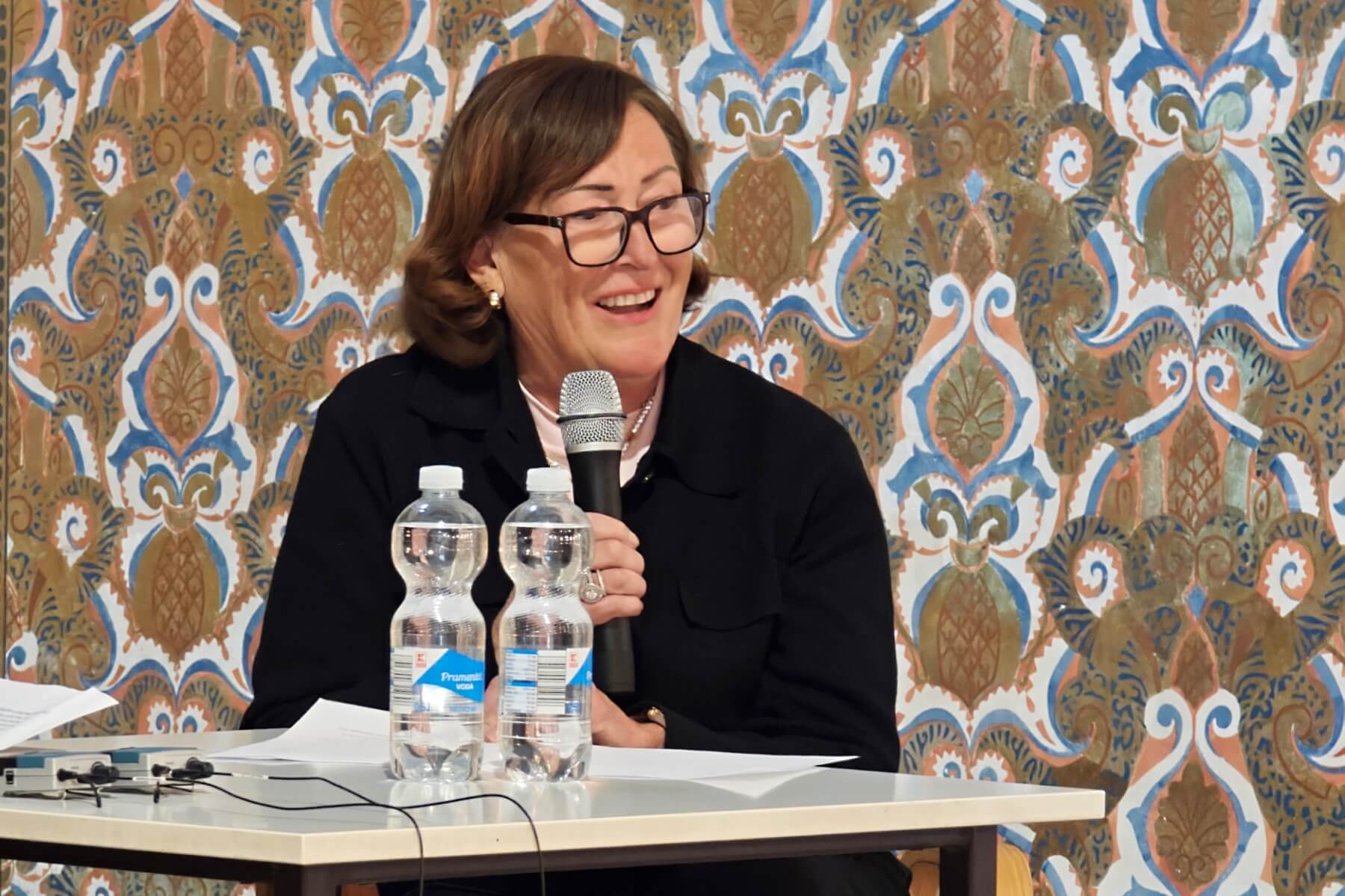
In her opening remarks, Angela Pick Greenway highlighted simple, seemingly everyday human relations: “I am deeply moved to have traveled from Canada and to be here today with my husband Jim, our children Stephanie, Jonathan, and Caroline, and four of our ten beautiful grandchildren—Sienna, Jake, Vera, and Riley. I am also delighted to be accompanied by people who have inspired and supported me over the years. Sharing this stage with the son of Sir Nicholas Winton brings me profound joy. It is moving to sit beside the son of a man who, over eighty years ago, saved my father’s life, making it possible for so many of us to gather here today. Just as Sir Winton’s heroism remained hidden for a long time, my grandfather’s memoirs written in Terezín were only discovered recently. We did not find them in a library or a museum; my father found them in a cardboard box at the bottom of a storage closet. They lay there in the dark for nearly fifty years, waiting to be found. I often think about how the most extraordinary things emerge from simple human kindness. And it is a rare privilege to see lives intertwine across decades and generations—how Nick’s father once extended a helping hand to my father, and how that thread continues to connect our families today.”
In closing, she included a quote from Sir Winton: “Don’t be content just not doing anything wrong, be prepared to try and do something good every day.”
Text: Svatopluk Jedlička, photo: Author of the text & Dr. Dagmar Lieblová Endowment Fund