Gideon Klein came from a Jewish family in Přerov. A talented musician and composer, he studied at the Prague Conservatory. In 1941, the Nazis deported him to Terezín, where he became involved in cultural activities within the ghetto. This year, we commemorate the 80th anniversary of the death of this exceptional composer. American violinist Avery Morris set out on his trail as part of a Fulbright scholarship. She succeeded in deciphering the messages of the compositions he wrote before his deportation.
Gideon Klein's work is primarily associated with his stay in Terezín. When did you first hear about him?
When I attended Jewish school at our synagogue, Kehillat Israel in Los Angeles, the teachers explained what happened in Auschwitz and other concentration camps. I don't remember them talking about Terezín. It was only thanks to my doctoral thesis at Stony Brook University that I first heard about Gideon Klein. At first, it seemed absolutely incredible to me that such a diverse cultural life could exist in the Terezín ghetto! Gideon found himself among painters, poets, and other artists. All of this inspired him. Paradoxically, he likely had the best creative environment, but in the worst possible conditions.
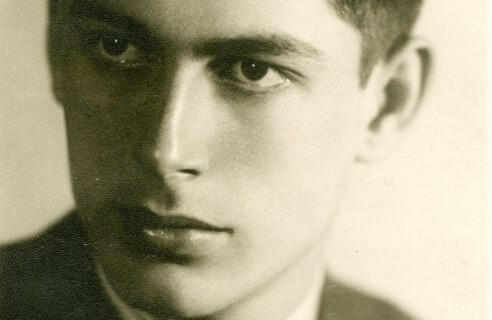
Gideon Klein
In Terezín, Gideon composed a piano sonata, a fugue for string quartet, and a string trio, but you focused on his compositions from before his deportation. Why?
At the university, we were supposed to choose a topic for our final recital. It occurred to me that I could introduce a Jewish composer from Europe who is not yet very well known in America. I was going through materials about Gideon, and it soon became clear to me that I wanted to focus on his work prior to deportation. The Jewish Museum in Prague sent me scans of his unfinished compositions from 1939–1940. So many experiments that truly thrilled me! Many of these pieces, however, exist only as manuscripts written in pencil. Klein's compositions first had to be analyzed and then transcribed.
That sounds almost like musical archaeology!
You are right! It involves assembling parts of the musical notation and examining the notes and markings he intended. After I first transcribed his Dodecaphonic Violin Sketch, I played it on the violin. It dawned on me that I was the first person to play this composition by Klein. At the time he composed it, he could no longer perform publicly. In 1944, he had to leave Terezín for a sub-camp of Auschwitz, where he was murdered. From the entire family, only his sister Eliška survived; she saved his Terezín compositions. The pre-Terezín compositions were discovered in the 1990s in an attic in Prague.
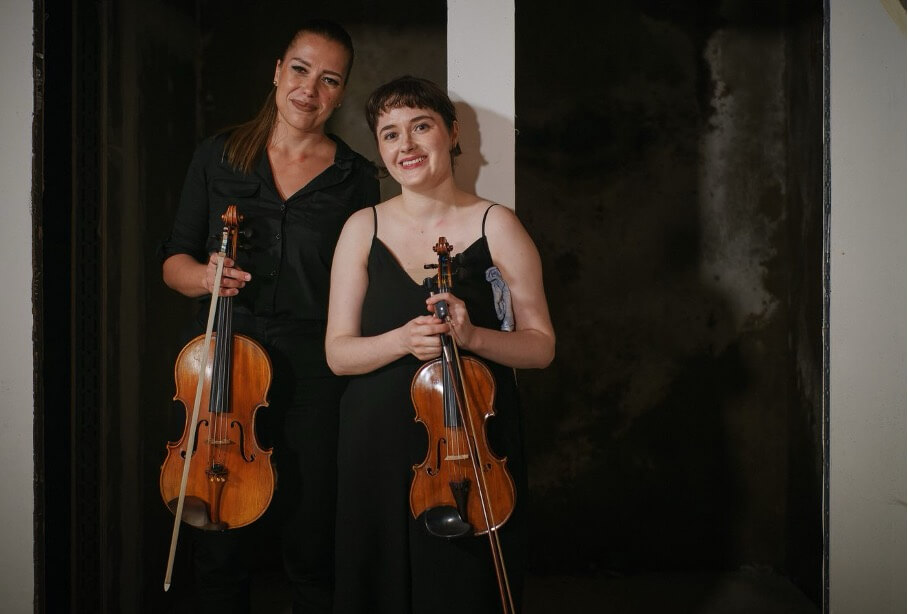
Eva Krestová and Avery Morris, from a concert of Klein's duo for violin and viola - Photo by Michal Romanovsky and Jakub Mayer
How do you decide how to transcribe the compositions or whether to complete them?
I maintain a scholarly approach so that it is clear what the original version is and what my arrangement is. It is very difficult to work with unfinished compositions. And the question is, why are they unfinished? Perhaps he was just trying out different variations and was still not satisfied. His quarter-tone music is very interesting. I recently published an article on the Živá hudba HAMU website, where I discuss Klein's composition for violin and viola. Some compositions have a date and a dedication; for example, the duo for violin and viola is for Alois Hába, who taught Gideon at the Prague Conservatory.
Indeed, Hába inspired him to experiment with different genres. What influences do you perceive most strongly in Gideon's work?
Thanks to Hába, Klein learned to work with microtones and dodecaphony; in addition, he was also well-versed in jazz music. For several months, he worked at the E. F. Burian Theater, which was dedicated to, among other things, very experimental music. Klein was very lucky that, thanks to his older sister, who also studied at the conservatory, he quickly became part of the artistic community in Prague. She would take him with her to cafes and concerts. Gideon, for example, wrote a blues sketch for saxophone, violin, piano, and drums.
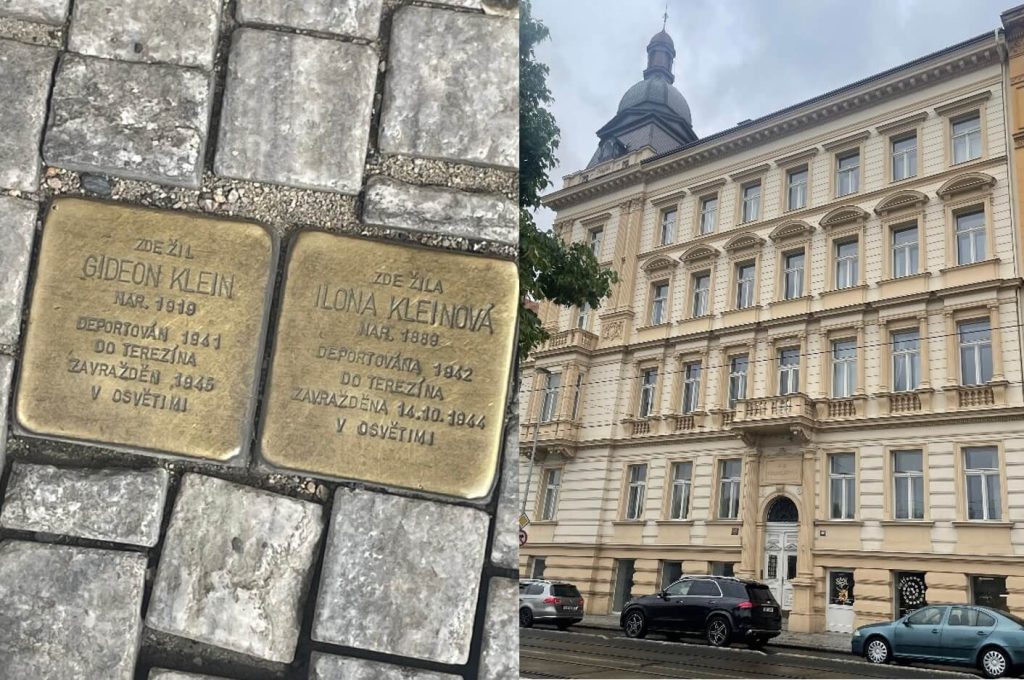
Stolperstein at Rašínovo nábřeží 66 - Photo by Avery Morris
Rašínovo nábřeží 66 - Photo by Avery Morris
We have mentioned Terezín several times, where Gideon created his work. What do you know about his activities from that time?
He was very active there. He composed, performed up to seven times a week, and also taught children and youth to play the piano. He tried to motivate musicians (such as Pavel Haas) to continue creating despite the difficult conditions in the ghetto. Gideon had his own trio, which included the young Brno violinist Paul Kling, whom Klein supported greatly. When I look at everything Gideon composed in Terezín, I think it was there that he could fully develop his compositional talent. Moments of joy alternated with pain and fear for his loved ones. Klein's last composition—the string trio—was completed only a few days before his deportation to Auschwitz.
What is typical of Klein's style?
His music is difficult, but very complex and bold. He has his own harmonic language, but it is an unpredictable harmony where very rapid changes occur, and it manifests horizontal rather than vertical/chordal harmony. You can hear elements of jazz and folk in it. Klein's music can be shocking in a certain way. Some people react with genuine surprise when they hear the quarter-tones, which are truly dark but at the same time almost grotesque. I love them because they are completely different from anything else I know.
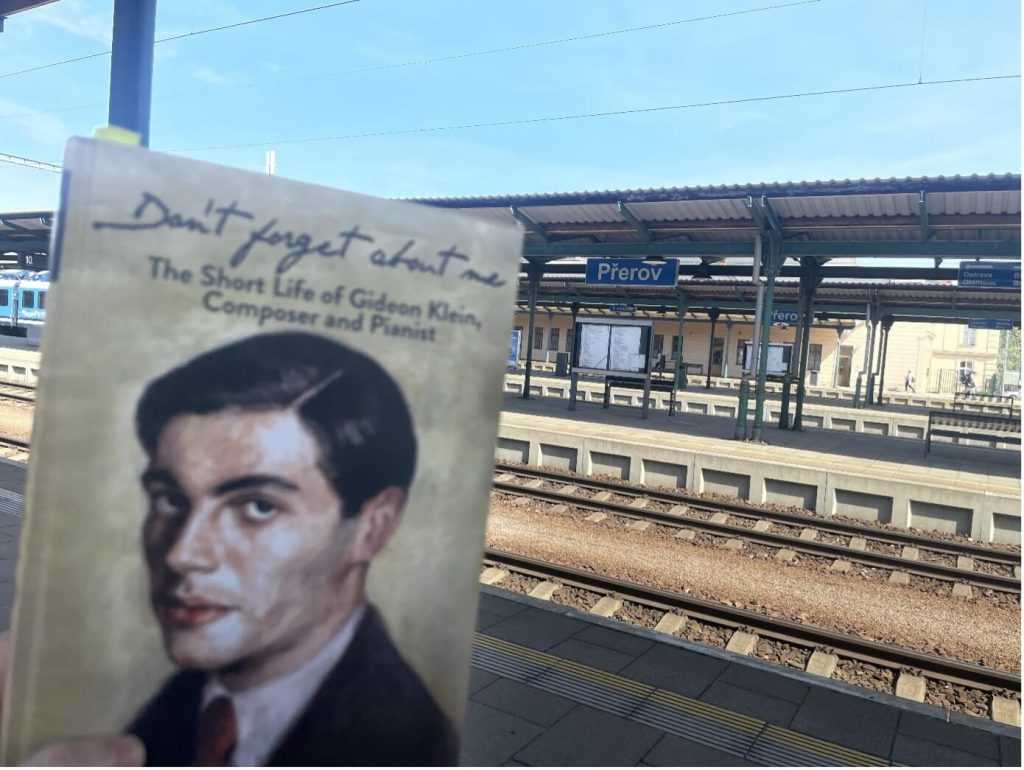
Avery Morris collaborating with David Fligg - author of the book Don’t forget about me - pictured here in Gideon Klein's hometown - Photo by Avery Morris
You set out on the trail of an exceptional musician. Where did you go?
In 2023, I received a Fulbright scholarship to research Gideon's work. I visited all the important places in Přerov and Prague associated with his life and work. David Fligg, the author of Klein's biography, which was published in Czech under the title Dopis od Gideona (A Letter from Gideon), was a great help. I have been several times to the house at Rašínovo nábřeží No. 66 in Prague, where Klein lived with his sister and mother. They organized house concerts there for friends from the artistic community. The house was renovated the year before last. The manager in charge of leasing the building was enthusiastic about my idea to film a concert directly in the house with violist Eva Krestová from the Czech Philharmonic. We played a piece that Klein composed right there.
You mentioned your collaboration with David Fligg. What does it consist of?
I am very grateful to him for sharing a wealth of information about Klein with me. We have a common goal: we want Gideon's story to be preserved and for not only the professional but also the general public to learn about it. David is the author of the concept and script for the play Gido – A Portrait of a Composer, which was performed this year as part of the Eternal Hope (Věčná naděje) Festival to commemorate the 80th anniversary of Klein's death at the Venuše ve Švehlovce theater in Prague. The performance included live pieces of Klein's work performed by the fama Q string quartet. I believe that David and I will continue to collaborate. I would very much like to organize a Klein festival in that house on Rašínovo nábřeží in the future. I would like to present the story of this exceptional composer comprehensively, so that everything that inspired him can be understood.